
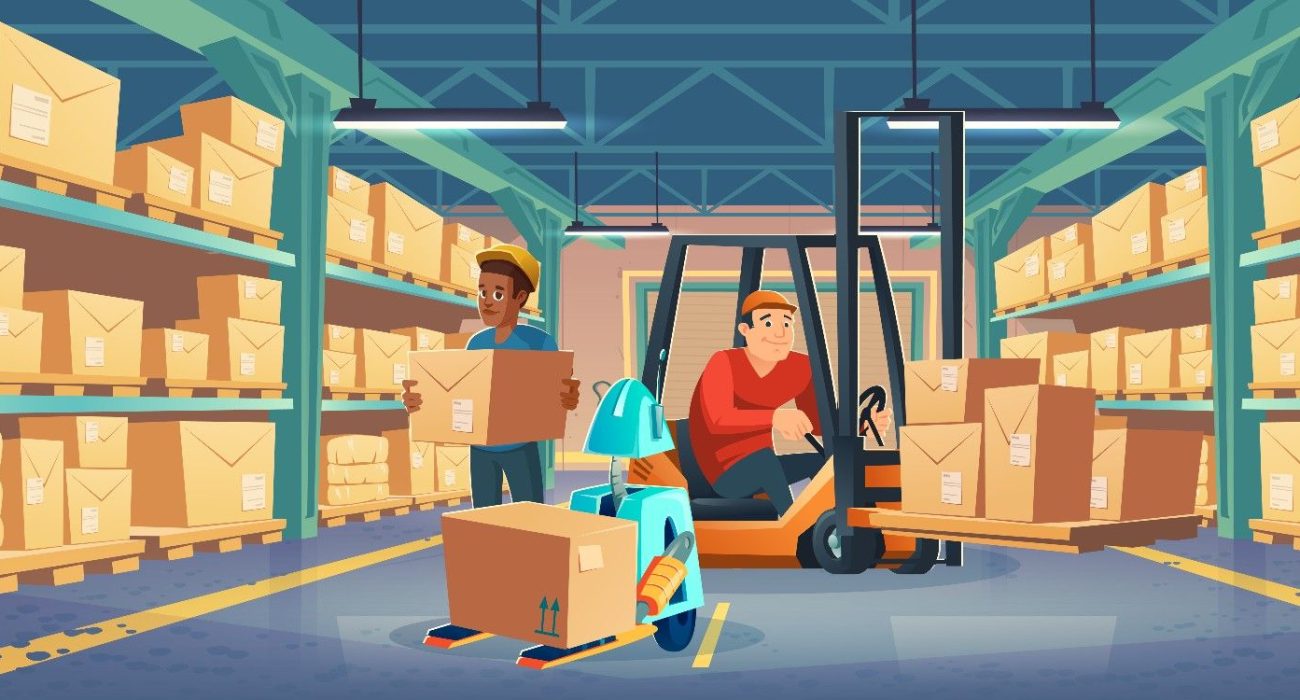
Warehouses in 2026 are under more pressure than ever. Faster deliveries, rising customer expectations, labor shortages and increasing inventory volumes are changing how supply chains operate. Businesses that still rely on spreadsheets or disconnected systems are already seeing delays, stock mismatches and higher operational costs.
A modern Warehouse Management System (WMS) helps businesses stay ahead by improving visibility, accuracy and warehouse performance. According to industry data, more than 90% of warehouses now use some form of WMS, as businesses move away from manual processes to improve inventory accuracy, speed and real-time visibility.
In this blog, we will look at the top warehouse challenges businesses are facing in 2026 and how WMS can solve them.
Top Warehouse Challenges For Businesses

1. AI Adoption and Data Utilization Challenges
Artificial Intelligence is rapidly changing warehouse operations, from demand forecasting to predictive maintenance. However, many businesses struggle to use AI effectively because their warehouse data is fragmented, inaccurate or stored across multiple systems.
A modern WMS serves as the foundation for AI-driven warehouses by providing clean, real-time operational data. By integrating with AI and analytics platforms, businesses can improve forecasting accuracy, optimize inventory levels and make faster data-driven decisions.
2. Global Supply Chain Disruptions, Wars and Oil Price Volatility
Geopolitical conflicts, trade restrictions and fluctuations in oil prices continue to disrupt global supply chains in 2026. Rising transportation costs, delayed shipments and inventory shortages can significantly impact warehouse operations and customer service levels.
A WMS helps businesses respond quickly to these disruptions through real-time inventory visibility, demand planning and multi-warehouse inventory management. With better control over stock levels and supply chain data, businesses can reduce risks, improve resilience and maintain operational continuity during periods of uncertainty.
3. Inventory Inaccuracy
Inventory inaccuracies continue to be one of the biggest causes of operational losses in warehouses. Manual data entry, misplaced products and delayed stock updates often result in stockouts, overstocking and fulfillment errors.
A WMS solves this by providing real-time inventory visibility through barcode scanning, RFID tracking and automated stock updates. Warehouse teams can quickly locate products, reduce shrinkage and improve order accuracy across operations.
4. Labor Shortages and Workforce Productivity
Warehouses around the world are facing ongoing labor shortages while customer demand keeps increasing. As a result, businesses are under pressure to do more with smaller teams.
A WMS improves workforce productivity through guided picking, automated workflows and intelligent task management. Features like voice picking and mobile scanning reduce training time, minimize errors and help employees work more efficiently.
5. Delayed Order Fulfillment
Modern customers expect same-day or next-day deliveries, making fast order fulfillment more important than ever. Even minor delays can negatively affect customer satisfaction and brand reputation.
A WMS streamlines the fulfillment process by automating picking, packing and shipping operations. Advanced strategies like wave picking, zone picking and batch picking enable warehouses to process higher order volumes in less time.
6. Poor Warehouse Space Utilization
Many warehouses struggle with overcrowded storage areas, poor layouts and inefficient inventory placement. These issues slow down warehouse movement and increase handling time.
A WMS helps optimize warehouse space by assigning storage locations based on product demand, movement frequency and available capacity. This improves warehouse flow while maximizing storage efficiency.
7. Lack of Real-Time Visibility
Without real-time data, warehouse managers often make decisions based on outdated information.
A modern WMS provides live dashboards, inventory visibility and operational reports. Managers can track inventory levels, monitor warehouse performance and respond quickly to operational issues.
8. Managing Multi-Warehouse Operations
Businesses operating multiple warehouses often face challenges with inventory synchronization and centralized control. It helps in streamlining processes as well.
A WMS simplifies multi-warehouse operations by allowing businesses to manage all facilities from a single platform. It improves inventory visibility, streamlines stock transfers and enables smarter order allocation across locations.
9. Returns and Reverse Logistics Complexity
Returns management has become a major challenge for eCommerce and retail businesses. Manual return processes increase delays and inventory confusion.
A WMS simplifies reverse logistics by tracking returned items, automating inspection workflows and updating inventory in real time. This helps businesses process returns faster and recover inventory value.
10. Demand Fluctuations and Seasonal Peaks
Warehouse demand can change rapidly during festive seasons, promotional campaigns and sudden market shifts. Without proper planning, businesses may face fulfillment delays and operational bottlenecks.
A WMS improves forecasting and inventory planning through real-time data and analytics. Businesses can better prepare for seasonal demand spikes while maintaining smooth and efficient warehouse operations.
11. Compliance and Traceability Requirements
Industries such as pharmaceuticals, food and manufacturing require strict inventory traceability and compliance tracking.
A WMS supports compliance by maintaining accurate audit trails, batch tracking and expiry-date management. This helps businesses improve traceability, reduce recall risks and meet industry regulations more effectively.
12. Integration Challenges with Other Systems
Many warehouses still rely on disconnected systems for ERP, transportation and inventory management, leading to data silos, delays and duplicate entries.
A modern WMS integrates seamlessly with ERP platforms, transportation management systems and warehouse automation tools. This creates a connected supply chain where data flows smoothly across departments, improving operational efficiency and decision-making.
Why Businesses Are Investing in WMS in 2026

Warehouse operations are becoming more data-driven and automation-focused. Businesses that invest in the right technology are improving efficiency while reducing operational costs.
A scalable WMS offers:
- Real-time inventory visibility
- Faster order fulfillment
- Improved warehouse accuracy
- Better labor productivity
- Reduced operational costs
- Higher customer satisfaction
Solutions like PALMS™ WMS help businesses manage warehouse operations with greater speed, accuracy and control. With our platform, companies can streamline inventory management, automate warehouse workflows, improve real-time tracking and seamlessly integrate with ERP and supply chain systems.
Address Warehouse Challenges with a Future-Ready WMS
Warehouse challenges in 2026 are becoming increasingly complex due to rising customer expectations, growing inventory volumes and ongoing supply chain disruptions. To stay competitive, businesses need smarter, more connected systems that can improve efficiency and support faster decision-making.
A modern Warehouse Management System (WMS) helps streamline operations, reduce manual errors and improve order fulfillment performance. If your warehouse still relies on manual processes or disconnected systems, now is the right time to modernize with a scalable solution like PALMS™ WMS. Connect with our team today to see how PALMS™ can transform your warehouse operations.
