Supply chains are becoming more data-driven, connected and responsive. Demand changes quickly, supplier delays can disrupt production and inventory decisions often need to be made before the full picture is available.
This is where AI supply chain software is gaining importance. Modern platforms can use artificial intelligence to forecast demand, optimize inventory, detect risks, analyze supply chain data and recommend actions. But there is a catch: almost every supply chain software vendor now claims to offer AI. So, what should businesses actually look for in AI supply chain software in 2026?
The answer goes beyond having an AI chatbot. The right software should work with your operational data, solve specific supply chain problems, integrate with existing systems and provide measurable business value. In this blog, we’ll explore the key features and capabilities to look for when evaluating AI supply chain software in 2026.
What Is AI Supply Chain Software?
AI supply chain software uses artificial intelligence, machine learning, predictive analytics, generative AI and AI agents to improve supply chain planning and execution.
For example, it can help businesses answer:
- Which products are likely to see higher demand?
- Which items could face a stockout?
- How much inventory should be maintained?
- Which suppliers may deliver late?
- Which orders require immediate attention?
- What happens if demand increases?
- Which warehouse activities are causing delays?
The value comes from connecting these predictions and recommendations to actual supply chain decisions.
8 Things to Look for in AI Supply Chain Software
1. AI-Powered Demand Forecasting
Demand forecasting remains one of the most important applications of AI in supply chain management. A good forecasting system should analyze more than historical sales. It should consider factors such as:
- Seasonality
- Sales history
- Promotions
- Product lifecycle
- Customer demand
- Lead times
- Inventory levels
- Open orders
- Location-level demand
- Supply constraints
The system should also let planners compare forecasts with actual results.
When evaluating a platform, ask: Can you test the forecasting model using our historical data? This gives you a better indication of performance than a generic accuracy percentage presented during a sales demo.
2. Inventory Optimization
Forecasting tells you what could happen. Inventory optimization helps determine what to do next.
AI inventory management software should help answer:
- How much stock should we hold?
- Where should inventory be positioned?
- When should replenishment happen?
- Which products are overstocked?
- Which products are at risk of stockout?
- How much safety stock is required?
The best systems consider demand variability, lead times and service-level requirements instead of relying only on fixed reorder points.
3. Real-Time Supply Chain Visibility
AI is only as useful as the data behind it.
Your AI supply chain software should connect information from systems such as:
- ERP
- WMS
- TMS
- OMS
- Manufacturing systems
- Procurement platforms
- Supplier systems
- IoT devices
Data freshness also matters. A recommendation based on yesterday’s inventory position may be very different from one based on current inventory, orders and warehouse activity. Look for software that can provide real-time or near-real-time data where the use case requires it.
4. Predictive Risk and Exception Detection
Supply chain teams cannot manually monitor every supplier, shipment, order and inventory movement. AI can identify patterns that deserve attention.
Useful capabilities include:
- Supplier delay prediction
- Potential stockout detection
- Demand anomalies
- Shipment delays
- Inventory discrepancies
- Capacity constraints
- Order exceptions
- Supplier performance risks
The important point is prioritization. Instead of receiving hundreds of alerts, planners should see the exceptions most likely to affect operations.
For example:
- Basic alert: Supplier delivery is delayed.
- Better AI insight: Supplier delivery is likely to miss the required date and could affect production within five days.
That difference can save planners significant time.
5. Scenario Planning and What-If Analysis
Supply chains rarely follow a single plan. Businesses need to understand the impact of different situations before making decisions.
AI supply chain software should help model scenarios such as:
- What if demand increases by 20%?
- What if a supplier misses two weeks of deliveries?
- What if transportation costs rise?
- What if warehouse capacity reaches 90%?
- What if inventory is moved between locations?
- What if a product launch generates higher demand?
AI can make scenario planning faster by identifying possible outcomes and trade-offs. This moves planning from reacting to disruption toward preparing for it.
6. Agentic AI and Controlled Automation
One of the biggest changes in supply chain technology in 2026 is the move from AI that provides insights to AI that can perform defined tasks.
A traditional AI workflow might look like:
Detect → Analyze → Recommend
An agentic workflow can move further:
Detect → Analyze → Recommend → Execute → Monitor
For example, an AI agent could identify a replenishment requirement, check predefined rules, prepare a purchase order and send it for approval. However, autonomous execution should come with clear controls.
7. ERP, WMS and TMS Integration
AI cannot compensate for disconnected supply chain systems. Before selecting software, check how it connects with your existing technology.
A strong AI supply chain platform should integrate with systems such as:
| System | Data / Process |
| ERP | Orders, purchasing, finance and master data |
| WMS | Inventory and warehouse operations |
| TMS | Transportation and shipment information |
| OMS | Customer orders and fulfillment |
| MES | Production data |
| Supplier systems | Availability and supplier performance |
| IoT | Equipment and operational data |
Also ask whether integrations are real-time, scheduled or batch-based.
For warehouse-heavy businesses, integration between AI supply chain software and WMS software is especially important. Planning can identify what needs to happen while warehouse systems execute the required activities.
8. Explainability, Security and AI Governance
An AI recommendation should not feel like a black box. If the system recommends increasing inventory, planners should be able to see why.
Useful features include:
- Recommendation explanations
- Source data
- Confidence scores
- Forecast drivers
- Historical performance
- Approval workflows
- Audit trails
Security also deserves close attention.
Evaluate:
- Role-based access
- Data encryption
- API security
- Data ownership
- Data retention
- Audit logging
- AI model governance
- Third-party AI dependencies
As AI moves closer to operational execution, governance becomes increasingly important.
How to Evaluate AI Supply Chain Software
Do not begin with a list of software features. Start with your biggest supply chain problems.
For example:
Problem → AI capability → Action → Business outcome
| Problem | AI Capability | Expected Outcome |
| Excess inventory | Inventory optimization | Lower carrying costs |
| Stockouts | Predictive replenishment | Better availability |
| Poor forecasts | Demand forecasting | Better planning |
| Supplier delays | Risk prediction | Earlier intervention |
| Warehouse inefficiency | AI analytics | Higher productivity |
| Too many exceptions | Intelligent prioritization | Faster response |
| Manual planning | AI recommendations | Less repetitive work |
Then ask vendors to demonstrate these use cases using your data or a realistic dataset.
Questions to ask during a software demo
Ask:
- What data does the AI use?
- How frequently is that data updated?
- How is forecast accuracy measured?
- Can we see why an AI recommendation was made?
- What happens when the recommendation is wrong?
- Which actions can AI perform automatically?
- Which actions require human approval?
- How does the platform integrate with our ERP and WMS?
- How are AI actions recorded?
- How will we measure ROI after implementation?
These questions can reveal the difference between a genuine AI capability and a feature that is mainly there for marketing.
What Will AI Supply Chain Software Look Like Next?
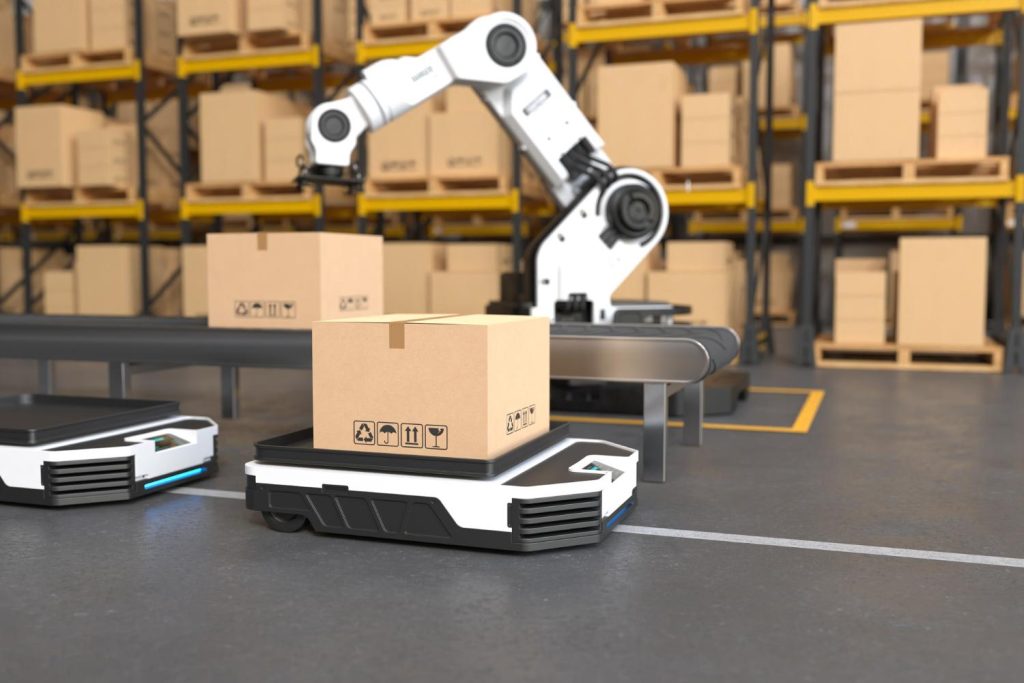
The next stage of supply chain AI will connect planning, execution and automation more closely.
AI systems will increasingly support:
- Continuous demand sensing
- Predictive inventory management
- Automated replenishment
- Supplier risk monitoring
- Intelligent warehouse operations
- Scenario simulation
- Exception management
- AI-assisted planning
- Agent-based workflows
- Human-AI decision making
PwC’s September 2026 research similarly describes supply chain planning as moving from periodic planning toward continuous, decision-driven capabilities that sense changes, evaluate trade-offs and support governed execution.
The important word is governed. Businesses do not need AI that acts without limits. They need AI that can make faster decisions while operating within clearly defined business rules.
How PALMS™ Smart WMS Can Help?
For businesses looking to connect AI-driven insights with day-to-day warehouse operations, PALMS™ Smart Warehouse Management System brings together warehouse management, inventory visibility, analytics, tracking and automation within a connected platform. Our capabilities can help businesses monitor inventory, analyze operational data, improve forecasting and streamline warehouse processes while integrating with existing ERP and other supply chain systems.
For organizations evaluating AI supply chain software, PALMS™ offers an example of how data, analytics and warehouse execution can work together to support faster, more informed supply chain decisions.
Frequently Asked Questions
What is AI supply chain software?
AI supply chain software uses artificial intelligence, machine learning and predictive analytics to improve supply chain planning, inventory management, risk detection, forecasting and operational decision-making.
What should I look for in AI supply chain software in 2026?
Key capabilities include demand forecasting, inventory optimization, predictive risk detection, real-time visibility, scenario planning, agentic AI, ERP and WMS integration, explainable recommendations and AI governance.
Can AI replace supply chain planners?
AI can automate repetitive analysis and selected tasks, but planners remain important for strategic decisions, exceptions and situations requiring business judgment. The most practical approach is to combine AI automation with appropriate human oversight.
How do I choose the right AI supply chain software?
Start with your most important supply chain problems. Then evaluate the software’s AI capabilities, data quality, integrations, automation controls, security and measurable business outcomes. A vendor demonstration using your own data can provide a much better evaluation than a standard product demo.
Final Takeaway
The best AI supply chain software in 2026 is not necessarily the platform with the longest list of AI features. Look for software that can work with your supply chain data, forecast demand, optimize inventory, identify risks, explain recommendations and connect those recommendations to real operational workflows.
Before making a purchase, test the software against real supply chain problems.
If your organization is looking to connect AI, warehouse management, inventory visibility and supply chain execution, explore PALMS™ Smart Warehouse Management System. With capabilities spanning analytics, warehouse control, inventory tracking and supply chain management, PALMS™ helps businesses build a more connected and data-driven operation. Contact us today to learn how PALMS™ can support your warehouse and supply chain goals.
