

Warehouse automation is entering a new phase of maturity. By 2026, the global warehouse automation market is expected to exceed $30 billion, reflecting the rapid adoption of robotics, smart software and connected systems across industries. As e-commerce volumes continue to surge and labor shortages persist, businesses are under increasing pressure to move goods faster, reduce errors and operate more efficiently. Automation technology has become a strategic necessity rather than a competitive advantage.
Several key trends are shaping this evolution. Advanced warehouse management systems (WMS) now come with built-in analytics and decision-making capabilities, while AI-driven demand forecasting helps businesses anticipate inventory needs with greater accuracy. Such innovations are redefining how warehouses manage inventory, fulfill orders and maintain end-to-end supply chain visibility. In this blog, we will explore the key warehouse technology trends shaping 2026 and how businesses can leverage these technologies to improve efficiency, accuracy and scalability.
Recent Technology Trends for Warehouses
Below, we’ve covered some of the most impactful automation trends shaping warehouse operations in 2026. These innovations are not just improving speed and accuracy, they’re redefining how teams interact with data, technology and each other across the warehouse floor.
AI and Machine Learning
Artificial intelligence and machine learning are becoming the intelligence layer that sits above every modern warehouse system. In 2026, AI is no longer limited to back-end analytics; it actively guides daily operations by interpreting data, predicting outcomes and assisting humans in real time. From forecasting demand and optimizing slotting to answering operational questions and automating reports, AI tools transform raw WMS, ERP and sensor data into clear, actionable insight.
As conversational AI and multimodal models become embedded into everyday tools, AI becomes the interface through which warehouses think, plan and operate. Below, we’ve highlighted some of the most widely used AI tools in warehousing today.
ChatGPT

ChatGPT is widely used as an operational assistant across logistics and warehousing environments. When integrated with WMS or analytics platforms, it enables teams to query live data in plain language and receive actionable insights.
It can be used to:
- Answer real-time operational questions about inventory levels, order status or throughput.
- Assist supervisors by summarizing daily performance reports and highlighting anomalies.
- Support workforce training by explaining SOPs, safety rules or system workflows on demand.
- Power internal chatbots that guide pickers, receivers and planners through tasks without needing constant human supervision.
By reducing dependency on specialized analysts or IT teams, ChatGPT democratizes access to warehouse intelligence and accelerates on-floor decision-making.
Google Gemini

Google Gemini brings strong multimodal capabilities, combining text, image and data interpretation. This makes it particularly valuable in environments where visual inputs such as shelf images, damaged goods or floor layouts are part of daily operations.
In warehouse settings, Gemini can:
- Analyze images from smart cameras to flag misplaced items, damaged cartons or empty locations.
- Summarize complex operational data into clear, human-readable insights for managers.
- Assist in layout planning by interpreting floor plans and suggesting optimization scenarios.
- Help forecast demand by synthesizing structured WMS data with external signals such as seasonality or promotions.
The ability to work across multiple data formats makes Gemini a strong tool for bridging physical operations with digital intelligence.
Microsoft Copilot
Microsoft Copilot integrates directly into enterprise tools such as Excel, Teams, Power BI and Dynamics, making it ideal for warehouse environments already running on Microsoft ecosystems.
Copilot enables teams to:
- Automatically generate daily and weekly operational reports.
- Analyze labor productivity, order velocity and space utilization using natural language prompts.
- Create predictive alerts for delays, capacity risks or inventory shortages.
- Assist in IT and operations teams by generating scripts or workflow automations for orchestration platforms.
By embedding AI directly into familiar tools, Copilot reduces manual effort and ensures that insights flow seamlessly across planning, execution and communication layers.
Google Bard

Bard excels as a conversational ideation and strategy assistant. While less operationally embedded than Copilot or ChatGPT, it plays a strong role in planning, documentation and communication.
Warehouses and logistics teams use Bard to:
- Generate process improvement ideas and alternative workflow strategies.
- Draft training materials, policies and safety documentation.
- Create customer-facing communications related to delays, service updates or onboarding.
- Explore “what-if” scenarios during capacity planning or expansion discussions.
This makes Bard particularly useful for leadership teams that shape long-term operational strategy.
Other Emerging AI Tools

Beyond mainstream platforms, several specialized AI tools are gaining traction in logistics:
- Claude and similar LLMs are used for compliance-heavy environments, helping generate audit-ready documentation and safety protocols.
- AI vision models analyze live warehouse imagery to detect mispicks, congestion or unsafe behavior in real time.
- Domain-specific planning engines ingest WMS and ERP data to recommend labor schedules, slotting strategies or capacity plans.
As these assistants become embedded into daily workflows, AI will no longer feel like a separate technology, it will become the interface through which warehouses operate.
Conversational AI Chatbots

Virtual agents and chatbots are booming in logistics. For example, PALMS™ now offers a generative AI chatbot on our site. This assistant answers product questions, helps book a demo and explores warehouse automation solutions with users.
WMS-focused chatbot can revolutionize customer interactions by enhancing sales, improving customer experience, aiding in lead generation and offering knowledge-driven responses.
PALMS™ Chatbot brings this advantage in-house. It can:
- Answer FAQs: Explain PALMS™ modules (like WIPTrack or Analytics) and basic WMS concepts instantly.
- Demo Scheduling: Engage visitors and set up demo calls right away, turning interest into action.
- Solution Guidance: Listen to user needs and recommend relevant PALMS™ features.
- 24/7 Support: Give instant, accurate answers anytime, without waiting for a human agent.
Our PALMS™ Chatbot aims to deliver similar efficiency by freeing up experts. By handling routine inquiries and demo bookings automatically, the chatbot frees up our team and ensures visitors get fast, accurate answers.
Robotics, Cobots and AGVs
Automation hardware remains a core pillar of modern warehouses. In 2026, most facilities deploy a mix of robots for picking, palletizing, sorting and internal transport. AGVs (Automated Guided Vehicle) follow predefined routes, while AMRs (Autonomous Mobile Robots) navigate dynamically using sensors and AI, working safely alongside human teams.
Collaborative robots (cobots) handle repetitive tasks, reduce errors and free workers for higher-value work. Across operations, robotics now powers smart packing, automated case handling, robotic picking and mini-load AS/RS systems for dense, high-throughput storage. Subscription-based Robotics-as-a-Service (RaaS) models further lower barriers, allowing even mid-sized warehouses to scale automation without heavy upfront investment.
Flexible and Modular Automation
Warehouses are moving away from large, fixed installations toward modular, plug-and-play automation. Conveyors, sorters and shuttle systems can now be added or reconfigured with minimal disruption, enabling businesses to pilot and scale at their own pace.
Cloud-based orchestration platforms connect WMS, ERP, robotics and IoT into a single, software-defined ecosystem. This allows real-time workflow changes during demand spikes, such as rerouting tasks or activating extra robots. Wearables, voice and light systems and AI-enabled “smart imagers” further improving agility, while hybrid retrofits ensure legacy environments can modernize without full replacement.
Visibility with IoT and Data
End-to-end visibility is no longer optional. In 2026, real-time tracking of inventory and shipments is a baseline requirement. IoT sensors, RFID tags and connected devices continuously stream data into centralized platforms, giving operators instant insight into the location, movement and condition of goods.
Cloud and blockchain-based systems now record every handoff across raw materials, WIP and finished goods, improving compliance and trust. Digital twins extend this visibility further, allowing warehouses to simulate layout changes, robot deployments or workflow updates before implementing them, reducing risk and improving planning accuracy.
3PL Warehousing and Cloud Services
As outsourcing accelerates, 3PL providers are becoming highly technology-driven. Modern 3PLs rely on advanced, multi-tenant WMS platforms to manage multiple clients, catalogs and billing models within a single facility.
Cloud-based WMS solutions allow rapid onboarding of new customers and sites without on-premise infrastructure. Additionally, centralized, real-time dashboards and mobile access make it easier to manage multiple distributed warehouses from a single control point. Built-in analytics, such as tools like Palms™ Analytics, provide deep insight into space utilization, labor productivity and order performance. It helps 3PL operators reduce costs, improve service levels and deliver greater transparency to their customers.
Inbound Automation and Storage Innovation
While outbound fulfillment once dominated automation investment, 2026 marks a shift toward inbound processes. Automated de-palletizers, smart vision systems and advanced scanners now enable “smart receiving,” reducing dock congestion, errors and manual handling.
Storage is evolving through software-driven AS/RS, shuttle systems and vertical lift modules that deliver dense, high-speed access without traditional capital barriers. Even racking is becoming intelligent with embedded sensors. Micro-fulfillment hubs complement these systems by enabling rapid, localized order processing.
Sustainability is another key driver behind these innovations. Automated pallet building, right-sized packaging and optimized travel paths reduce waste, energy use and transport trips, aligning performance gains with greener warehouse operations.
How PALMS™ Can Help You Stay Ahead
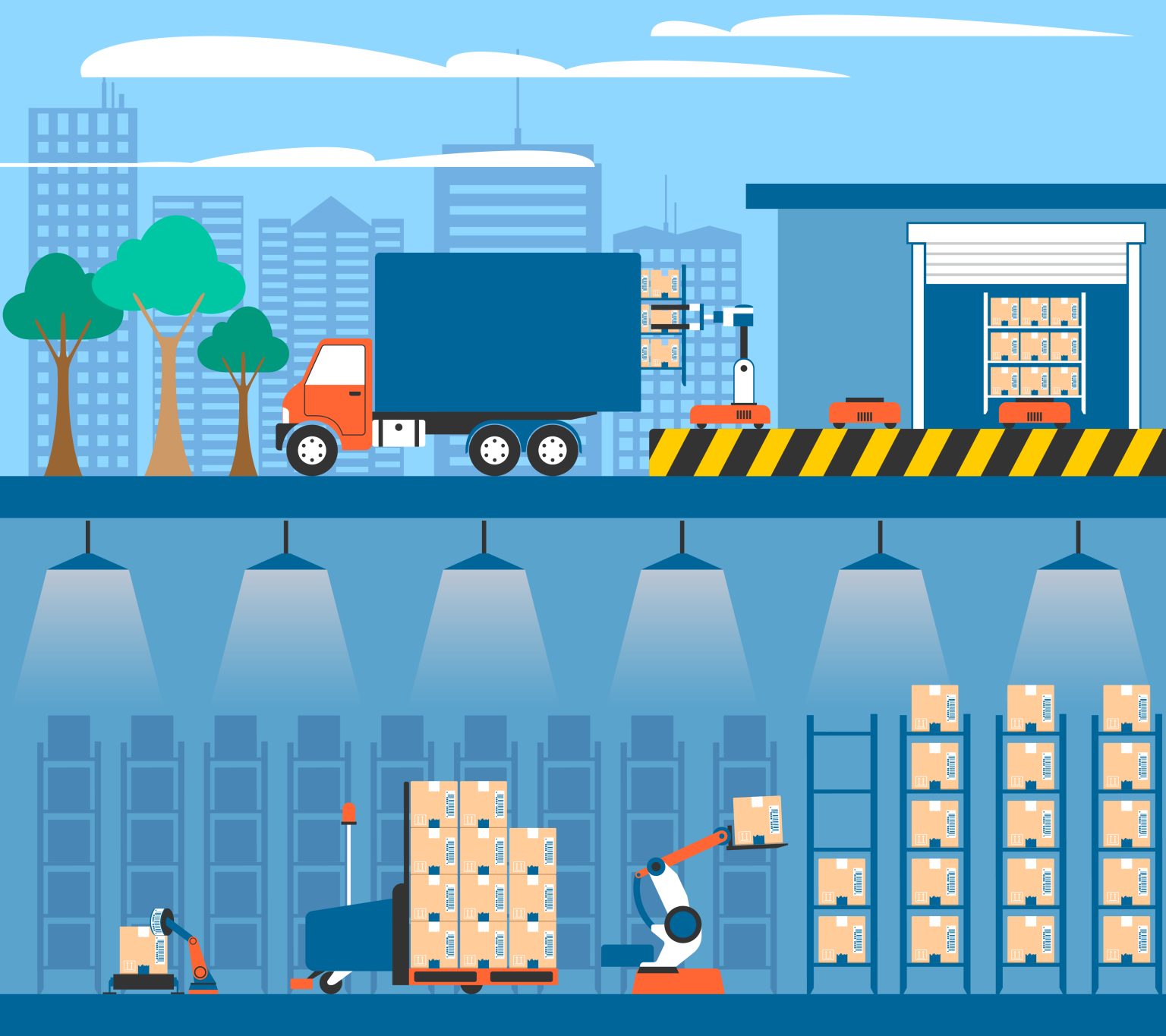
PALMS™ brings intelligence and visibility to warehouse operations by turning raw operational data into actionable insights. By analyzing historical sales, inventory movement and order patterns, we help warehouses forecast demand more accurately, optimize stock levels and reduce both overstocking and stockouts.
Beyond forecasting, we help with smarter decision-making across the warehouse. Whether managing a single facility or a multi-warehouse network, PALMS™ helps operations adapt faster, improve efficiency and scale automation investments with confidence.
Conclusion
By 2026, warehouse automation will be defined less by individual technologies and more by how intelligently those technologies work together. Warehouses are no longer just physical spaces for storing goods, they are becoming data-driven, adaptive ecosystems that can sense, decide and act in real time.
From conversational AI tools to robots that move and pick autonomously, the modern warehouse is built for speed, resilience and scale. These trends collectively reduce costs, improve accuracy and enable businesses to meet rising customer expectations in an increasingly volatile market.
With the right strategy and technology foundation, organizations can move beyond incremental gains and achieve true operational transformation. If you’re looking to modernize your warehouse operations or explore how data-driven automation can support your growth, connect with PALMS™ today to learn more.
