

For years, warehouse operations relied on clipboards, handheld scanners and a heavy dose of manual labor. Workers walked long aisles, scanned barcodes one at a time and reconciled counts manually. That approach worked when order volumes were manageable. But as SKUs multiplied and customers began expecting faster fulfillment, the limits of manual processes became harder to ignore.
Computer vision is rapidly changing that equation. What was once an experimental technology is now becoming a practical tool for improving accuracy, speed and visibility across warehouse operations. According to sources, the global computer vision market, it is projected to reach USD 58.29 billion by 2030, with a significant share of that growth coming from warehousing and logistics. In this blog, we will take a closer look at how computer vision is transforming warehouse operations for businesses worldwide.
Improving Inventory Visibility with Barcodes and Modern Cameras
Barcode scanning has been a foundational technology in warehouse management. It digitized inventory movement, reduced paperwork and gave operations a dependable record of where goods were moving. Even today, it remains a reliable and widely used method for tracking inventory across receiving, storage and shipping workflows.
As warehouse operations grow in scale and complexity, however, the need for faster and more automated data capture has increased. Barcode scanning works best when items are accessible and workflows are structured, but high volumes, dense storage layouts and tight fulfillment timelines can make manual scanning more time-consuming during peak periods.
Computer vision builds the strengths of barcode technology by adding continuous, automated visibility. Instead of replacing existing systems, cameras installed at receiving docks, conveyor belts and storage zones work alongside barcode and RFID solutions to capture data in real time. AI models analyze visual inputs to identify items, read labels, count pallets and detect irregularities, often without interrupting workflow.
Benefits of Computer Vision in Warehousing
Computer vision delivers measurable operational improvements by turning visual data into real-time insights. The key advantages of Computer Vision in warehousing are:
- Higher Inventory Accuracy: Continuous monitoring reduces counting errors and ensures inventory records stay aligned with actual stock levels.
- Faster Throughput and Order Fulfillment: Automated identification and verification processes reduce delays at receiving, picking and shipping stages.
- Reduced Labor Costs and Manual Work: By automating repetitive tasks such as counting and verification, teams can focus on higher-value activities.
- Improved Workplace Safety: Real-time monitoring of forklifts, equipment and worker movement helps prevent accidents before they occur.
- Lower Error Rates and Returns: Early detection of mispicks and discrepancies reduces costly shipping errors and customer returns.
- Better Space and Resource Utilization: Data-driven insights help optimize storage layouts, dock usage and workforce allocation.
Key Use Cases of Computer Vision in Warehousing Today
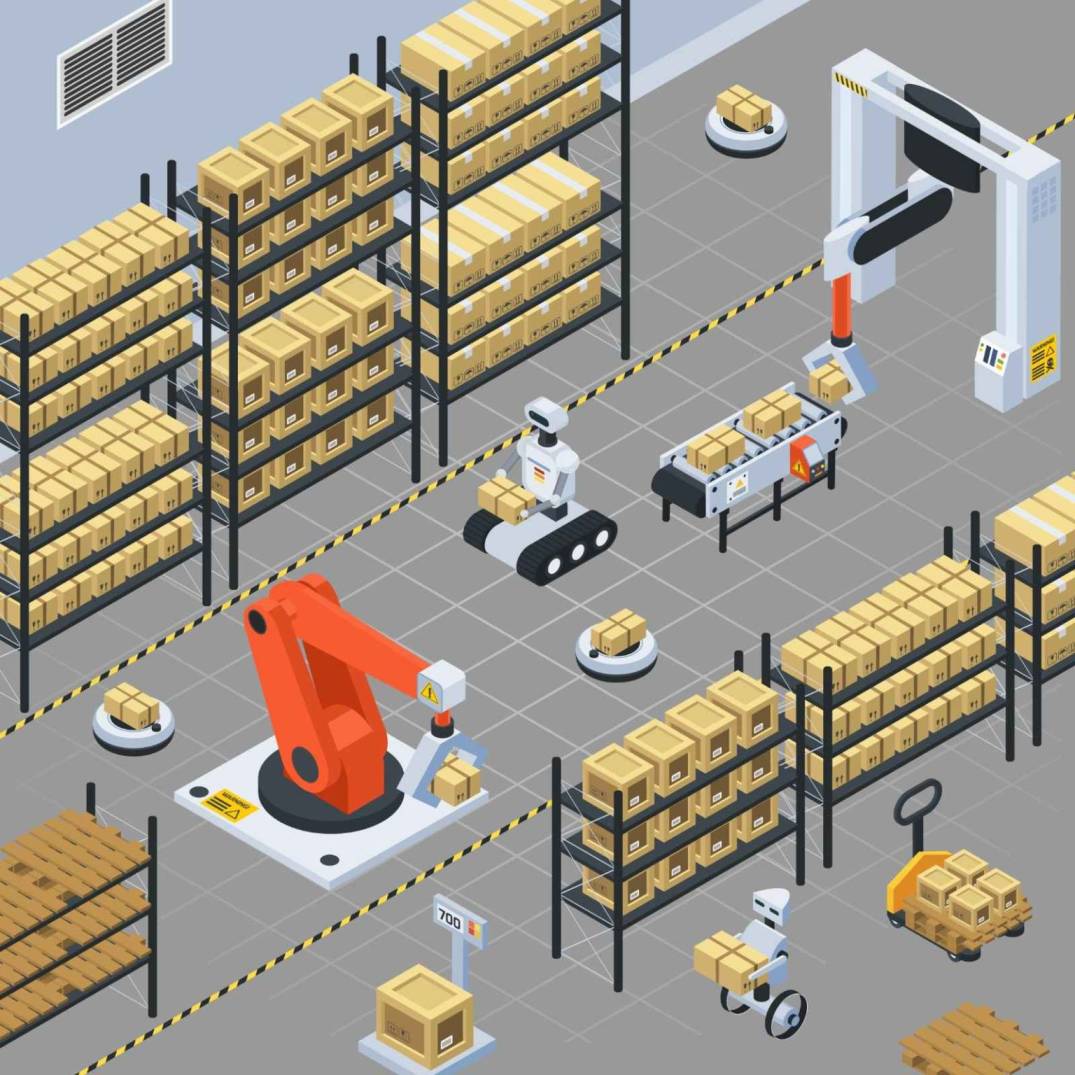
Computer vision is no longer a future-facing concept in warehousing. It is already being deployed across day-to-day operations to improve accuracy, reduce manual work and increase real-time visibility.
Inventory Counting Without Manual Scanning
Traditional cycle counts take days and still produce errors. Computer vision systems run counts continuously. Gartner predicts that by 2027, 50% of companies with warehouse operations will use AI-enabled vision systems to replace traditional scanning-based cycle-counting processes. Many operations have already been implemented.
Receiving and Putaway Verification
When trucks arrive, vision systems verify incoming shipments at the dock. They cross-reference what arrives against purchase orders, flag discrepancies immediately and log the data without manual entry.
At the receiving dock, computer vision aids in efficiently managing incoming goods and verifying correct materials and quantities. For putaway, the same technology tracks where pallets go the moment they are placed, eliminating the time wasted searching for misplaced stock.
Pick Accuracy and Mispick Detection
Order accuracy is where computer vision delivers some of its clearest ROI. Vision systems confirm that the right item has been picked before it moves to packing. If a worker grabs the wrong SKU, the system flags it immediately rather than letting the error reach the customer.
Forklift and Worker Safety Monitoring
Computer vision monitors vehicle speed, cornering behavior and proximity to pedestrians or racking. By monitoring the speed, cornering and proximity of forklifts to objects and people, computer vision proactively identifies potential hazards. This moves safety from reactive, investigating incidents after they happen, to preventive.
Yard and Dock Management
Computer vision assists in yard management by tracking and logging truck activities, measuring wait times and activity durations to optimize the flow of goods in and out of the warehouse. Knowing exactly where each truck is and how long it has been at a dock removes a significant source of operational guesswork.
Challenges to Deploying Computer Vision
The real challenge of this technology lies in deploying computer vision effectively at scale and ensuring it delivers consistent operational value. Most implementation hurdles are not technical failures, but planning, integration and adoption issues that can be addressed with the right strategy.
Integration with Existing WMS
Integrating computer vision with an existing warehouse management system is often the biggest obstacle. Vision systems generate large volumes of data, but that data only becomes valuable when it flows seamlessly into the WMS to trigger updates, alerts and workflows. Without proper integration, new technology can create additional complexity instead of improving efficiency.
Solution: Plan integration early by defining data flows, workflows and system interfaces upfront. Additionally, work with vendors that offer proven APIs and middleware compatibility.
Environmental and Infrastructure Constraints
Warehouse environments are not always ideal for camera-based systems. Factors such as dim lighting, dust, fast-moving goods and high storage racks can affect image quality and system accuracy.
Solution: Conduct a site assessment before deployment to optimize lighting, camera positioning and hardware specifications for real operating conditions.
Change Management and Workforce Adoption
Technology adoption is as much about people as it is about systems. Workers need to understand how computer vision supports their roles rather than replace them. Without clear communication and training, resistance to new processes can slow implementation and limit the technology’s benefits.
Solution: Involve frontline teams early, provide hands-on training and communicate the operational benefits to build trust and encourage smooth adoption.
How PALMS Smart WMS Connects the Dots
Computer vision generates large volumes of operational data. A warehouse management system (WMS) determines how that data is used to drive decisions and workflows.
PALMS™ Smart WMS is designed to support the creation of a true Digital Warehouse, one that captures inventory information in real time and converts it into actionable insights for managers and teams. The platform already supports multiple data capture methods, including RFID, vehicle-mounted terminals and long-range scanners.
With PALMS™ Smart WMS, robotics and automation systems operate as part of a coordinated workflow. Backed by deployments across more than 500 warehouses in over 20 countries, PALMS™ brings the operational experience needed to make technology adoption more predictable and scalable.
If you want to explore how computer vision and a smarter WMS can transform your warehouse operations, connect with PALMS™ today.
Email: [email protected], [email protected]
SOURCES
FAQs
What is computer vision in warehousing?
Computer vision uses cameras and AI software to automatically identify, count and track items, pallets, vehicles and workers. It feeds real-time data into warehouse management systems without manual scanning.
How does it differ from barcode scanning?
Barcode scanning requires a worker to manually aim for a scanner at each label. Computer vision reads labels and counts inventory automatically using cameras, operating continuously without any human trigger.
What tasks can computer vision automate?
Common applications include inventory counting, receiving verification, pick accuracy checks, forklift safety monitoring, yard management and putaway tracking.
How does it integrate with a WMS?
Vision systems generate data such as item counts, location updates and exception flags. That data feeds into the WMS, which uses it to update records, trigger workflows and guide workers or robots.
